

The Software Illusion as a Silver Bullet & The Unbroken Value Chain
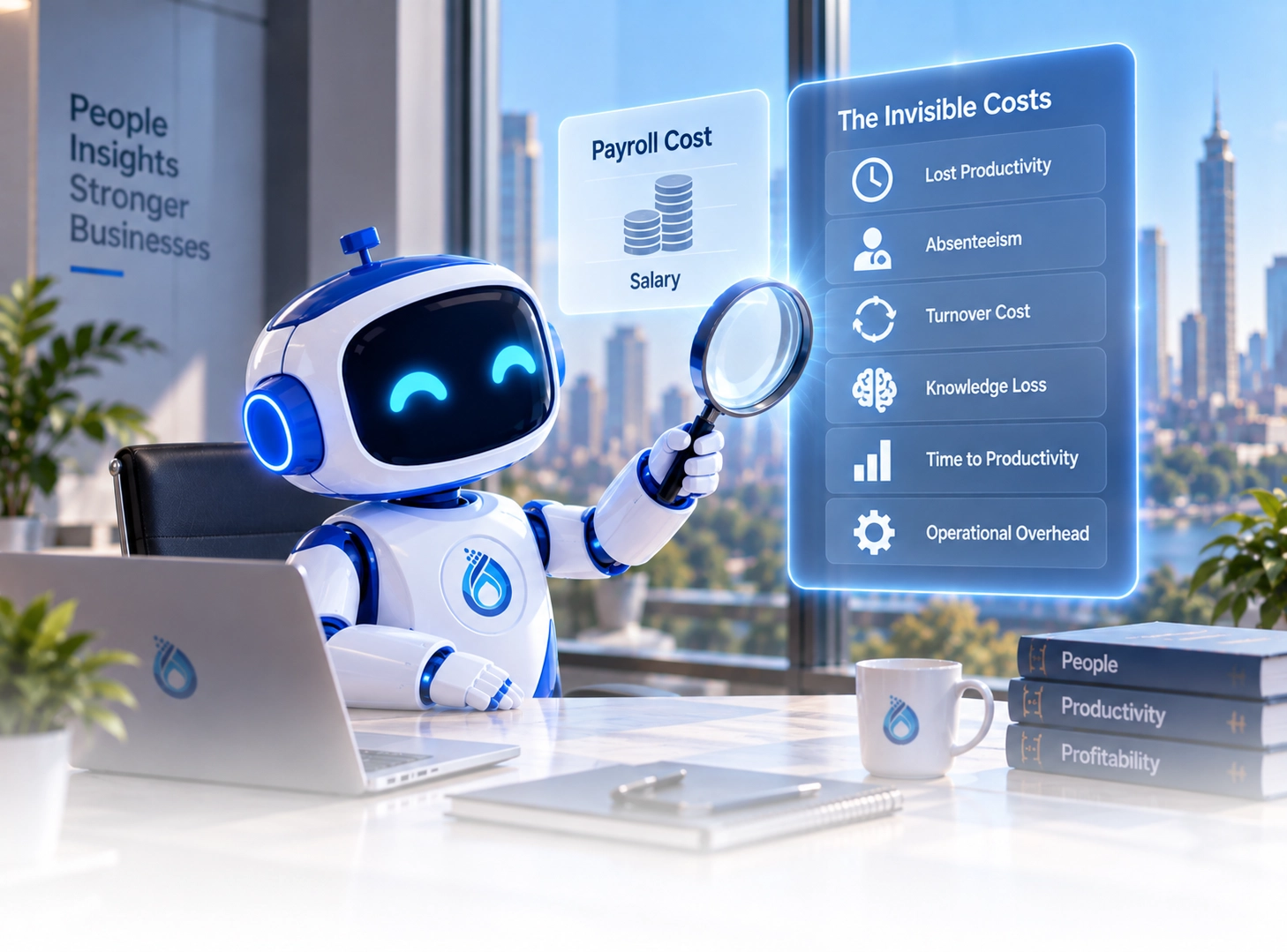
Many enterprise leaders launch their HR digital transformation from the wrong premise: assuming that purchasing a modern HRIS/HCM platform or selecting software with the longest feature list will inherently resolve core operational bottlenecks. Empirical evidence from enterprise deployments paints a vastly different picture. Industry research conducted by Bersin in partnership with Tata Consultancy Services reveals that approximately 40% of HCM cloud implementation projects are categorized as failures or fall substantially short of their strategic expectations. This discrepancy typically stems from treating software deployment as an isolated technical installation rather than an end-to-end organizational transformation centered on processes and measurable business outcomes.
Delivering professional HR technology and consulting services is not a transactional sale that concludes at software handoff; it is an unbroken value chain. This journey originates in deep problem discovery and progresses through 12 tightly interconnected phases: Need Understanding, Diagnosis, Problem & Goal Definition, Solution Design, Client Alignment, Implementation & Integration, Testing & Verification, Training & Readiness, Delivery, Support & Monitoring, Improvement & Optimization, and Value Realization. A single weak link across this continuum compromises the ultimate business value realized by the client.
Understanding True Need: Customer Requests vs Operational Problems & 3P Test
Client engagements frequently begin with explicit feature requests, such as demanding a new approval interface or a custom dashboard. Defining project scope directly from these surface requests carries substantial risk; a feature request describes a preferred solution from the user's perspective, but rarely diagnoses the root operational bottleneck.
To convert initial requests into rigorous business specifications, organizations apply the 3P Scope Test framework: Problem (identifying what must measurably improve in the operational failure point), Place (determining the correct software layer instead of overloading the core ERP), and Path (evaluating the safest route balancing standard functionality, configuration, and custom extension).
Shortchanging discovery leads to severe consequences. Alvarez & Marsal case studies highlight an enterprise that deployed an HRIS without formal requirements gathering; functional gaps escalated costs tenfold and delayed go-live. Audits in Dallas and Oregon similarly demonstrate that undocumented shadow systems destroy governance. Architectural design requires evaluating COTS/SaaS, direct configuration, and custom web apps, validated through unified C-suite alignment.
Context Preservation & Human Readiness: Bridging Build & Adoption
A primary driver of value erosion is the loss of operational context during internal handoffs between sales and implementation teams. When sales sets expectations without transmitting customer nuances, reality clashes during configuration. As Junior Achievement case studies demonstrate, initial expectations frequently clash with software constraints during detailed requirements gathering, requiring continuous scope re-evaluations.
Furthermore, technical stability does not equal organizational readiness. Implementation requires strict User Acceptance Testing (UAT) and parallel runs; TCS studies document a financial institution delayed by 3 months after discovering 70 undocumented legacy queries during execution.
Concurrently, organizations must bridge the Human Readiness Gap. TalentPredix (2026) research proves only 10% of employees use digital tools daily if psychological safety and enablement are absent. Change management must focus on role-based self-service: in Target's enterprise HCM rollout, early change investment enabled line managers to execute 98% of HR transactions directly without operational support bottlenecks.
Involving implementation consultants early during pre-sales to eliminate discovery gaps.
Preventing legacy data surprises (e.g., resolving TCS's 70 undocumented query risks).
Applying Target's benchmark where structured training enabled 98% direct manager execution.
Post-Delivery Value Realization: Continuous Optimization & Executive CTA
The go-live date represents a project milestone rather than the destination; real value realization begins post-deployment through ongoing adoption and continuous optimization. Once deployed, HR technology shifts the department's operating model from administrative record-keeping to strategic organizational enablement.
Long-term value realization relies on three operational pillars: 1) Support & Service Delivery Models: Deploying structured case management, tiered support, and self-service knowledge bases to ensure continuous stability. 2) Iterative Optimization: Applying continuous improvement frameworks such as PDCA (Plan-Do-Check-Act) cycles and PIECES diagnostic analysis to adapt system capabilities to evolving operational needs in Society 5.0 environments. 3) Business Impact Measurement: Tracking the migration of HR capacity from manual transactional administration to strategic consulting.
When this 12-stage unbroken continuum is maintained, enterprise technology ceases to be a mere operational expense; it transforms into a strategic engine delivering measurable business value. Tidal's Inspira One HCM integrates problem-centric deployment with local Saudi compliance.
Ready to Build Your HR Architecture Around Real Business Value?
Connect with Tidal executive consulting team today for a complimentary strategic session to diagnose your operational bottlenecks and deploy Inspira One HCM aligned with your genuine needs.
Book Your Problem-Centric HR Consultation Now →