
Articles & Tech Insights

Expert articles on digital transformation, ERP systems, HCM systems , designed to help businesses optimize operations and achieve peak efficiency.

المقال المميز

Inspira One HCM

How to Optimize & Reduce HR Overhead Costs: Operational Efficiency Guide

Are you looking to optimize HR costs without employee layoffs?

SHRM estimates annual HR costs at $3,100 per employee, while Gartner shows HR consumes 0.67% of corporate revenue and 1.22% OpEx. This comprehensive guide details Cost Cutting vs Cost Optimization, EY data entry error costs ($291 per payroll error), turnover replacement costs across sectors (Retail, Healthcare, Tech), and Saudi GOSI/Mudad/Qiwa compliance.

Ahmed Azqlani
31 August 2026

Our Articles

How to Optimize & Reduce HR Overhead Costs: Operational Efficiency Guide
Inspira One HCM

How to Optimize & Reduce HR Overhead Costs: Operational Efficiency Guide

Are you looking to optimize HR costs without employee layoffs?SHRM estimates annual HR costs at $3,100 per employee, while Gartner shows HR consumes 0.67% of corporate revenue and 1.22% OpEx. This comprehensive guide details Cost Cutting vs Cost Optimization, EY data entry error costs ($291 per payroll error), turnover replacement costs across sectors (Retail, Healthcare, Tech), and Saudi GOSI/Mudad/Qiwa compliance.

Engineering Recruitment Velocity: Sourcing & Onboarding Compression Guide
Inspira-One-PMS

Engineering Recruitment Velocity: Sourcing & Onboarding Compression Guide

Why does recruitment take weeks or months when a position is urgent?The global average time to fill sits at 44 to 56.7 days, yet actual interview evaluation totals only 12.3 hours per hire. This operational guide details Time to Fill vs Time to Hire, the Net Cost of Vacancy (Net COV) equation, eliminating Coordination Tax, Saudi Qiwa 10-day contract rules, and digital pre-onboarding.

The Standardization Myth: Tailored HR Models for Enterprise Growth in Saudi Arabia
Inspira-One-PMS

The Standardization Myth: Tailored HR Models for Enterprise Growth in Saudi Arabia

If an HR management model proves successful in a specific company or country, can it be replicated seamlessly in another organization?The empirical answer is no—best-performing HR practices cannot be copy-pasted blindly. This comprehensive guide compares the Best Practice vs Best Fit strategic schools, maps Hofstede's cultural dimensions, details a study of 157 MNEs in Saudi Arabia, and provides the Core-Plus-Local framework with WPS Qiwa-GOSI-Mudad compliance.

Corporate Hiring Rules: Operational & Financial Blueprint for New Departments
Inspira-One-PMS

Corporate Hiring Rules: Operational & Financial Blueprint for New Departments

When expanding or launching a new department, should executives hire immediately or first define who, why, and how many employees are required?McKinsey shows 73% of companies rely solely on short-term headcount planning, while only 12% execute strategic workforce planning. This comprehensive guide details workload FTE formulas, McKinsey's 5 manager span archetypes, KSA fully-loaded cost multipliers (1.64x base salary in Saudi Arabia), onboarding retention levers, and Qiwa/Mudad/HADAF compliance.

People or Systems? The Executive Guide to HR Structuring in Scaling Businesses
Inspira One HCM

People or Systems? The Executive Guide to HR Structuring in Scaling Businesses

When expanding a company, should executives start by hiring an HR professional or purchasing HR software? This critical dilemma impacts CEOs, CFOs, and COOs.Growing businesses spend 11 hours per week (25% of executive time) on manual HR administration. Based on EY research, Ernst & Young proves correcting a single manual payroll error costs $291 (1,091 SAR). This comprehensive guide breaks down HR Function vs HR Tech, details 4 growth stages, evaluates 3 strategic deployment paths, and provides a clear scaling roadmap.

Complete HR Job Titles Guide: Responsibilities, HRBP Model & Career Paths
Inspira One HCM

Complete HR Job Titles Guide: Responsibilities, HRBP Model & Career Paths

Job titles in Human Resources vary significantly based on company size, industry, and organizational HR maturity. A startup HR Manager performs basic administrative tasks, whereas an enterprise HR Director manages multi-million dollar budgets.Based on SHRM, CIPD, Deloitte, and Gartner benchmarks, this comprehensive guide decodes the top 10 HR job titles (from Assistant to CHRO), clarifies key distinctions (HRBP vs HR Manager, Generalist vs Specialist), and details Dave Ulrich's 3-pillar model (CoE, HRBP, Shared Services) and career progression paths.

Transforming HR: How Strategic HR Drives Enterprise Value & Profitability
Inspira One HCM

Transforming HR: How Strategic HR Drives Enterprise Value & Profitability

In today's volatile business landscape, disengaged workforces and high employee turnover present silent $8.9 trillion threats to corporate balance sheets. According to Gallup's 2025 report, global employee engagement stands at just 21%.Elevating human capital management to Strategic Human Resource Management (SHRM) redefines HR as a core business driver. This comprehensive guide details how strategic HR increases revenue per employee by 300% (McKinsey), quantifies turnover costs, masters People Analytics, and aligns with Saudi Vision 2030 and WPS compliance.

Can Another Department Handle HR Tasks? Human Capital Governance Guide
Inspira One HCM

Can Another Department Handle HR Tasks? Human Capital Governance Guide

If Finance processes payroll, Operations manages on-site staff, and IT handles systems, why does a company need an HR department? This practical question is frequently raised by CEOs and CFOs looking to optimize operational costs.At first glance, fragmenting people-related tasks across departments seems like a lean, cost-saving strategy. However, does this model hold up under pressure over time, or is it a structural trap? This article examines the core distinction between executing a task and governing the HR function, mapping collaborative touchpoints, Dave Ulrich's 4 roles, and mitigating the 'Accidental Manager' syndrome.

CFO & CHRO Strategic Alliance: Bridging Finance & HR for Enterprise Profitability
Inspira One HCM

CFO & CHRO Strategic Alliance: Bridging Finance & HR for Enterprise Profitability

Why does HR frequently make a decision that is right for employees, only for it to create a massive budget variance? Conversely, why does Finance implement a cost-saving measure that looks pristine on paper, but ultimately ravages workforce productivity? This classic corporate paradox has long fueled annual budget friction.Modern business demands merging the language of capital with the language of talent. Workforce costs typically represent 50% to 70% of operating expenses (OPEX). According to PwC, 60% of CEOs view the CHRO as their key strategic partner second only to the CFO. This guide outlines the fully-loaded Total Cost of Workforce (TCOW), HADAF subsidies, and 5 joint performance metrics.

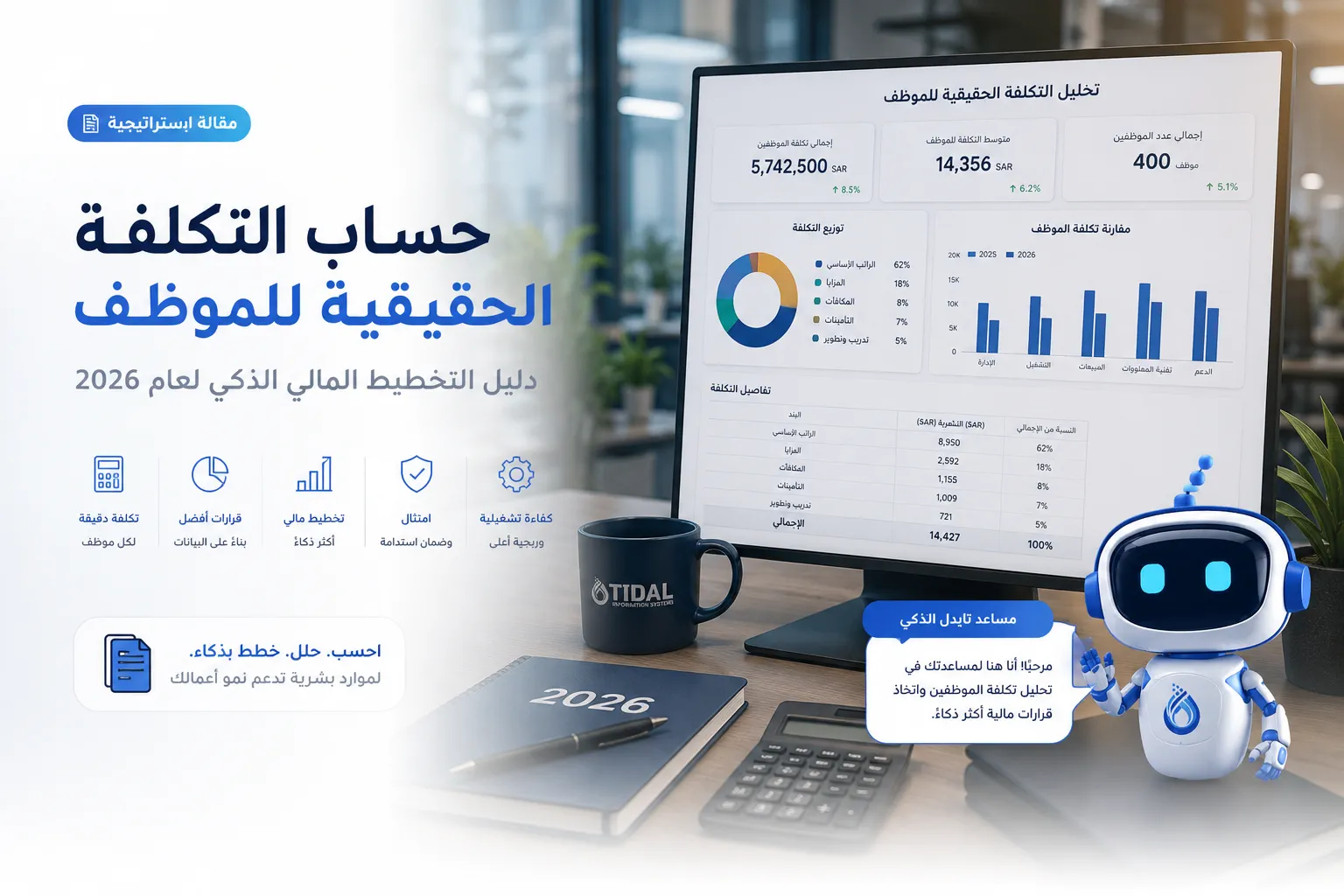
True Cost of an Employee in KSA 2026: Fully-Loaded TCOW Executive Guide
Inspira One HCM

True Cost of an Employee in KSA 2026: Fully-Loaded TCOW Executive Guide

When executive leadership asks for the true cost of an employee, evaluating workforce costs based solely on contractual basic salary is a classic financial trap. In financial planning, this nominal figure is merely the 'sticker price'. Sophisticated financial analysis demands transitioning to a comprehensive framework: Total Cost of Workforce (TCOW).The fully-loaded cost encompasses direct salaries, employer social security (GOSI), mandatory medical insurance (CCHI), platform subscriptions (Qiwa and Mudad), expatriate levies, and accrued End-of-Service Benefits (EOSB). In KSA, the true loaded cost routinely reaches 1.6x to 1.9x the base salary. This guide presents an audited mathematical roadmap for CFOs and HR leaders for 2026.

Will AI End HR Professionals? Strategic Guide to Survival in a Hybrid Workplace
Inspira One HCM

Will AI End HR Professionals? Strategic Guide to Survival in a Hybrid Workplace

'Will AI take my job?' This is the silent yet urgent question on the mind of almost every Human Resources professional today. As a continuous wave of new tools promises to automate everything from resume screening to payroll processing and performance evaluations, anxiety has naturally crept in.Is this the end of human-led HR, or are we witnessing the greatest work redesign since the Industrial Revolution? Empirical data shows a story of deep transformation, rewriting boundaries between humans and machines. This strategic guide explores empirical data from Gartner, McKinsey, and Deloitte to outline the skills and structures required for future HR leadership.

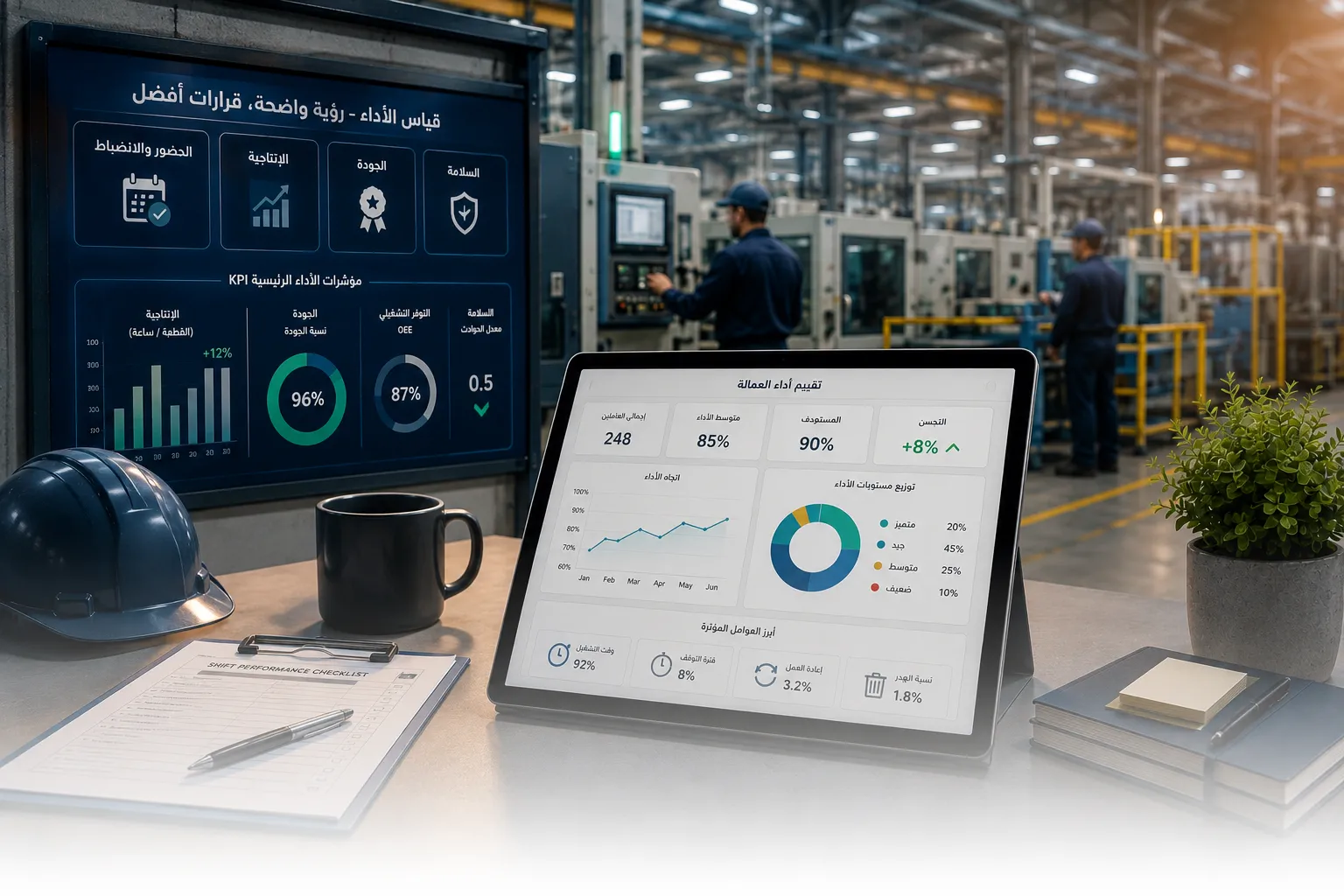
Manufacturing Workforce Performance Management: Headcount to Productivity Under Industry 4.0
Inspira One HCM

Manufacturing Workforce Performance Management: Headcount to Productivity Under Industry 4.0

In the daily morning operations briefing, a familiar friction plays out: the Plant Manager points to a delayed production board, demanding to know why the facility failed to meet its shipment targets. In response, the HR Manager presents attendance records proving shift headcount is at 100%. Meanwhile, the CFO voices deep concern over labor expenses exceeding the budget due to overtime spikes.This disconnected dynamic highlights a classic manufacturing failure: the systemic confusion between 'Production' (absolute volume produced) and 'Productivity' (relative efficiency of converting physical and human inputs into quality products). Operating without integrated shop-floor and workforce data forces leaders to make decisions in the dark. This guide provides an operational framework to measure, analyze, and optimize human capital for enhanced profitability.

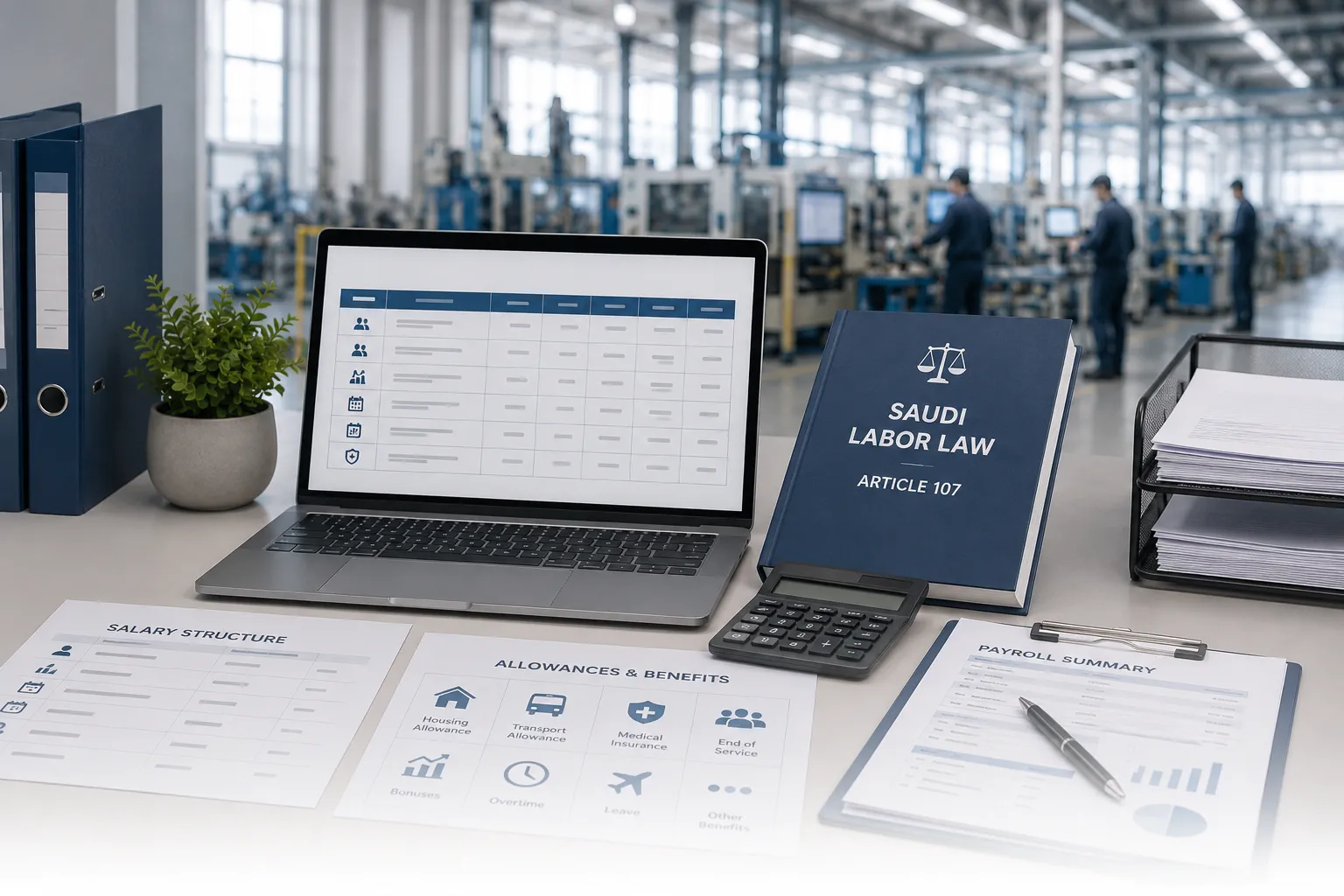
Saudi Manufacturing Salary Structure: Payroll Compliance, Article 107 Overtime, & Benefits Guide
Inspira One HCM

Saudi Manufacturing Salary Structure: Payroll Compliance, Article 107 Overtime, & Benefits Guide

Every morning across the Kingdom's industrial hubs, as raw materials transform on the assembly floor, operations managers face a recurring bottleneck: is the frontline workforce properly rostered, adequately rested, and accurately compensated? In continuous 24/7 manufacturing environments, an unscheduled delay in worker transit or a shift handover mismatch can stall production lines, racking up substantial downtime costs.To salvage output, supervisors frequently rely on emergency overtime (OT). However, when payroll teams calculate these hours based on basic wages alone—unilaterally omitting fixed contractual allowances—they spark deep-seated payroll disputes and trigger systemic compliance flags. In Saudi Arabia's highly regulated labor landscape under Vision 2030, such administrative oversights represent severe compliance liabilities that can stall operations and deplete margins.

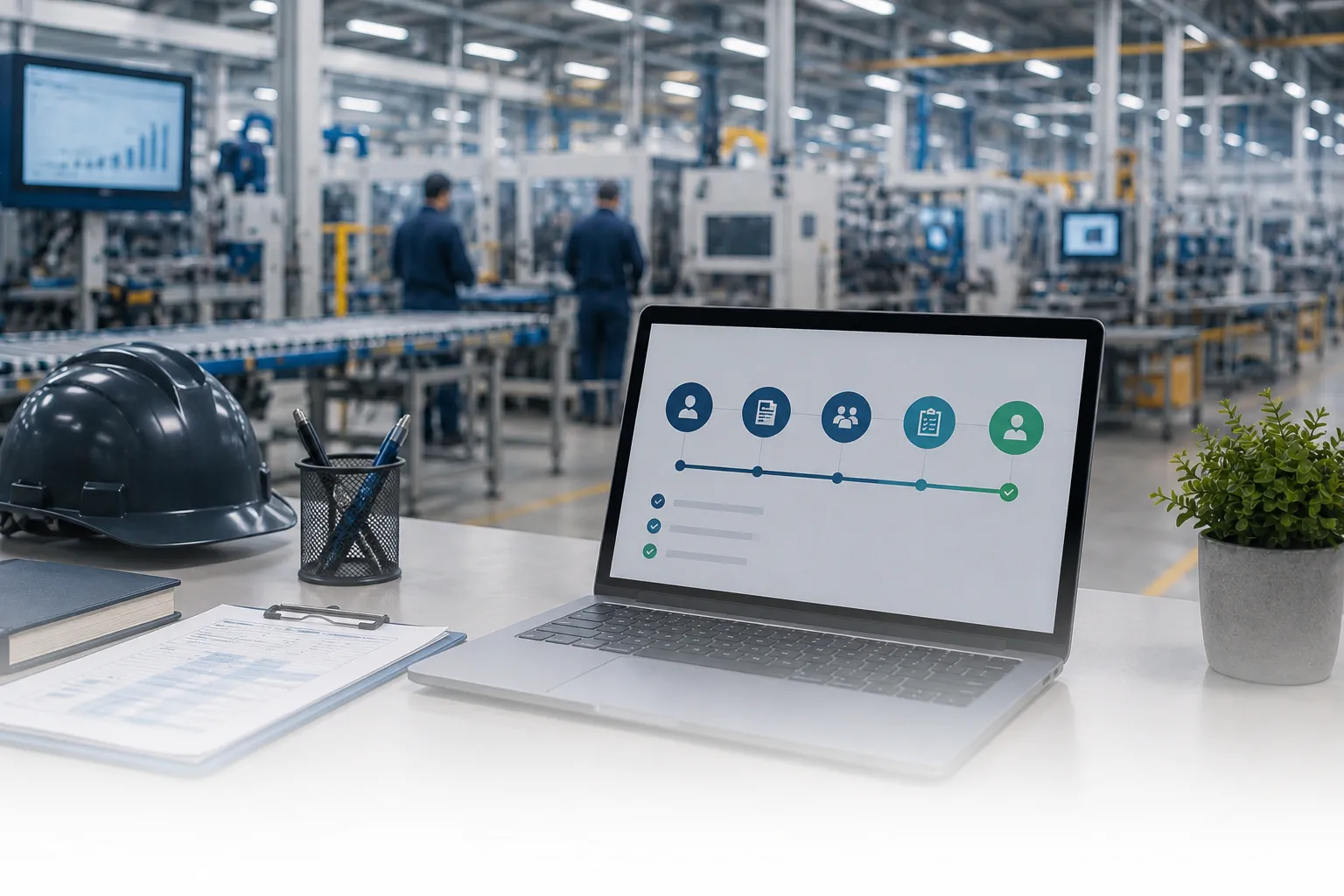
How Can Manufacturers Prevent the Costs of New Employees?
Inspira One HCM

How Can Manufacturers Prevent the Costs of New Employees?

The real crisis on a production floor begins silently. An operations manager finds themselves facing a sudden labor shortage; production lines lag, delivery deadlines slip, and the newly hired machine operator stops answering calls after only two weeks on the job. This recurring scenario is rarely a compensation issue; instead, it is a structural flaw in the operational design of the pre-boarding and shop floor onboarding workflows.Industrial data shows that annual manufacturing turnover averages between 35% and 40%, with up to 40% of new hires walking out within their first 90 days in the absence of structured onboarding programs. Furthermore, first-year frontline workers are 3 times more likely to suffer workplace injuries than experienced peers. Building an integrated onboarding system—from trade testing to independent productivity—is a strategic necessity for Saudi manufacturing leaders.

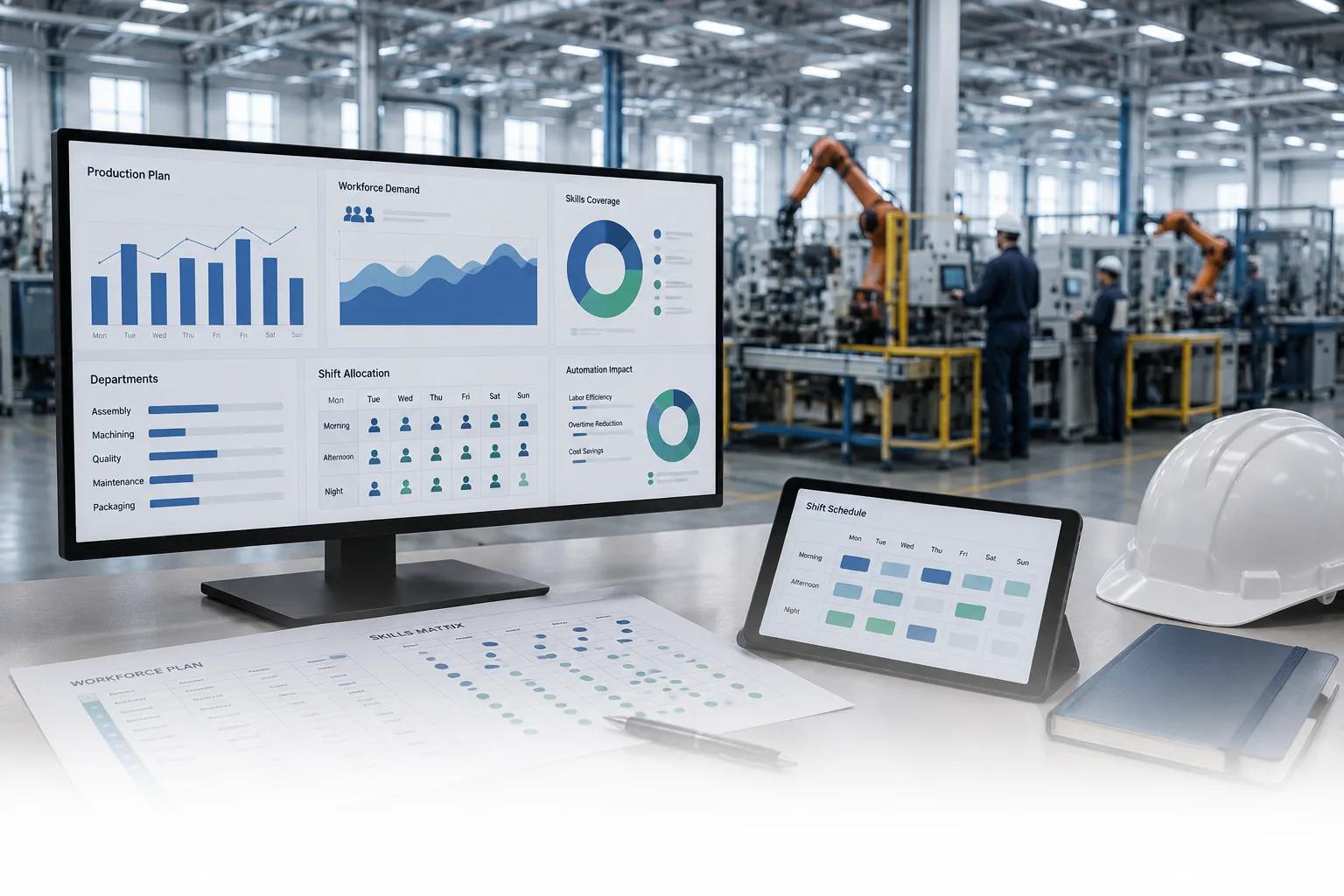
Manufacturing Workforce Planning: Production Needs, Skills Matrix, & Shift Automation
Inspira One HCM

Manufacturing Workforce Planning: Production Needs, Skills Matrix, & Shift Automation

At 6:15 AM on a cold winter morning in an industrial zone in Riyadh, a plant manager faces a recurring operational bottleneck: the primary laser-welding operator has called in sick. The immediate fallout is chaotic: the line stops, and the shift supervisor is forced to search for a replacement using outdated spreadsheets or tribal knowledge. Often, this results in assigning an under-qualified worker to a multi-million-SAR machine, triggering quality rejects or imposing expensive overtime on the preceding shift.This is not a routine HR scheduling issue; it is a breakdown in manufacturing workforce planning. Under Saudi Vision 2030 and the national Future Factories Program, factories cannot afford to manage human labor with reactive manual processes. This guide outlines the mathematical, behavioral, and technological structures required to elevate factory floor efficiency from a reactive state to a predictive asset.

How Does a Factory Measure Employee Productivity? Operational Metrics for HR and Operations Managers
Inspira One HCM

How Does a Factory Measure Employee Productivity? Operational Metrics for HR and Operations Managers

During the daily morning meeting, the Plant Manager points in frustration at the delayed production board, questioning why the factory failed to meet its shipment targets. In defense, the HR Manager presents attendance reports proving that shift headcount is at 100% and labor availability is fully secured. Meanwhile, the CFO expresses deep concern over the rising cost of labor as a percentage of operational budgets, driven by an uncontrolled spike in premium overtime expenses.This disconnected management dynamic illustrates a classic manufacturing failure: the systemic confusion between 'Production' (the absolute volume of output produced) and 'Productivity' (the relative efficiency of converting physical and human inputs into high-quality products). Operating without integrated systems forces industrial leaders to make critical scheduling decisions in the dark. This guide provides an operational framework to help HR and operations leaders measure, analyze, and optimize human capital for enhanced profitability.

Industrial Attendance Management: Transforming Time Data into Operational Intelligence on the Factory Floor
Inspira One HCM

Industrial Attendance Management: Transforming Time Data into Operational Intelligence on the Factory Floor

Picture this familiar morning scene across Saudi manufacturing plants: it is 7:00 AM, and a long queue of technicians forms at the factory gates. Due to harsh physical realities on the shop floor—heavy dust, extreme heat, and oil-slicked hands—conventional biometric scanners struggle to read fingerprints. The process slows to a crawl, shaving off precious productive minutes from the new shift while multi-million dollar machinery sits idle.Meanwhile, the shift supervisor has no real-time visibility into attendance. If a key technician fails to show up, the gap is only discovered when a line fails to start. To prevent an unscheduled line stoppage, the supervisor is forced to keep an operator from the previous shift to cover the gap—triggering unplanned premium overtime rates and exposing fatigued workers to safety risks. Time on the factory floor is not merely a back-office payroll transaction; it is the vital current that powers manufacturing output, machine utilization, and net profitability.

Why Do Some Factories Fail to Determine the True Cost of an Employee?
Inspira-One-PMS

Why Do Some Factories Fail to Determine the True Cost of an Employee?

At the end of a fiscal quarter, a manufacturing Chief Financial Officer (CFO) sits down with the factory owner to review the general ledger, only to uncover a frustrating discrepancy: actual gross margins are significantly lower than projections, despite assembly lines running at full capacity and sales targets remaining stable. Upon reviewing employee logs, the payroll budget appears perfectly aligned with projections. Where is the leakage occurring?The answer lies in a common pitfall among manufacturing leaders: confusing an employee's nominal salary with the Total Cost of Workforce (TCOW). In Saudi manufacturing facilities, the human element represents a complex operating structure loaded with indirect, logistical, and compliance costs that are rarely captured accurately by traditional accounting methods. Failing to calculate the true fully loaded cost of operators and technicians inevitably leads to incorrect product pricing, invisible financial waste, and expansion strategies built on shaky data.

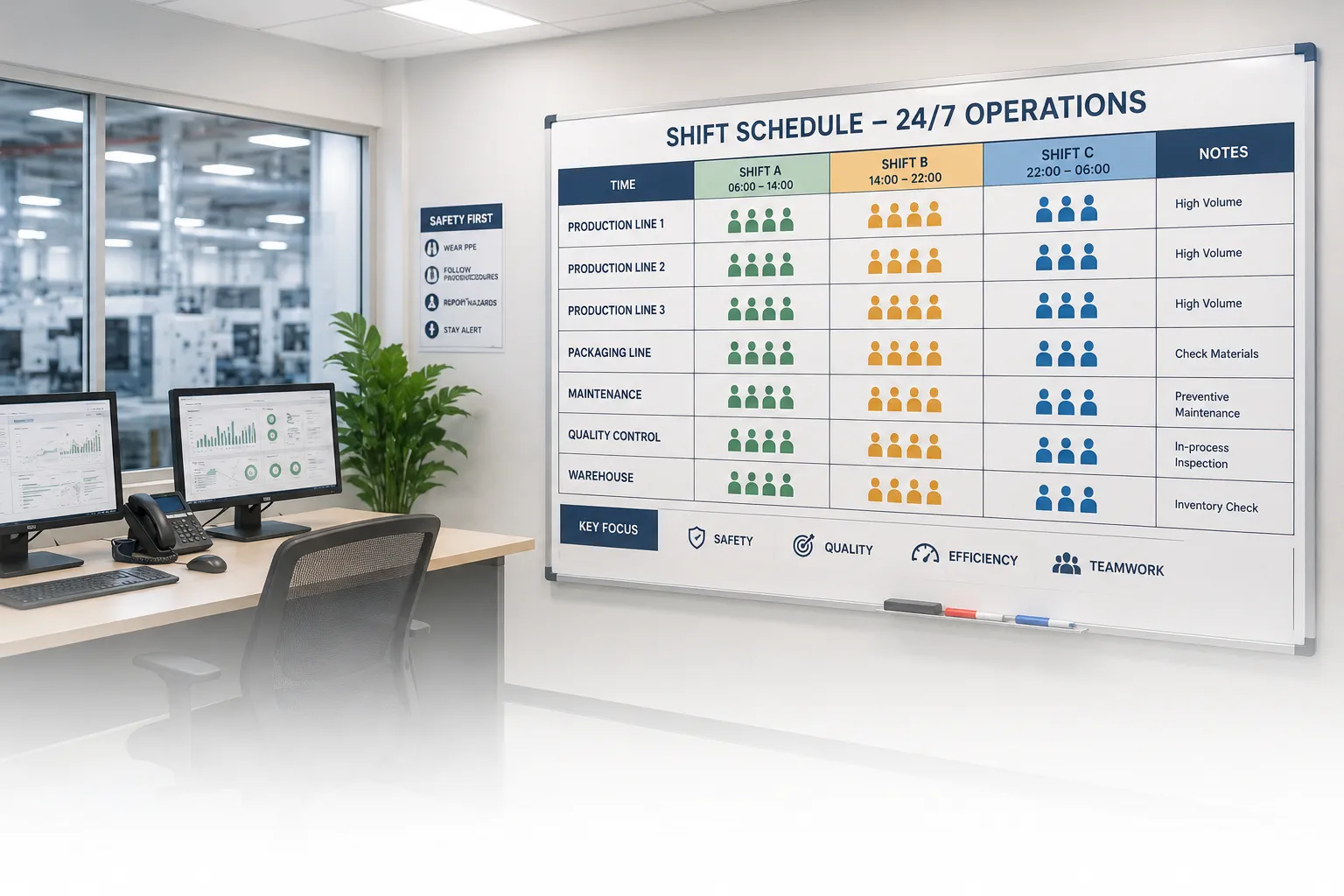
Shift Management and Continuous Operations in Saudi Factories: Ensuring Seamless Production Without Workforce Burnout
Inspira One HCM

Shift Management and Continuous Operations in Saudi Factories: Ensuring Seamless Production Without Workforce Burnout

In the world of manufacturing and heavy production, time never stands still, and neither do the massive machines on the plant floor. Operating large Saudi factories on a continuous 24/7 basis is an absolute necessity to maximize equipment utilization and fulfill large-scale contractual delivery targets. However, this non-stop rotation hides a silent, daily operational battle fought by HR and production managers: Shift Rostering and Continuous Operations Management.Does the actual shift roster align with the required operational capacity for each production line? How do field supervisors handle sudden absenteeism without instantly reverting to costly emergency overtime? And how can factories ensure a safe and seamless transition of tasks during shift handovers without losing precious minutes of operational uptime? Poor shift management not only leads to elevated accident rates and machine breakdowns due to fatigue, but directly impacts the factory's financial health and bottom-line margins.

HR Management in Saudi Factories: Navigating the Challenges of Workforce, Shifts, and Production
Inspira One HCM

HR Management in Saudi Factories: Navigating the Challenges of Workforce, Shifts, and Production

Every morning, as the start of the first shift in factories across Saudi industrial cities, the wheels of production begin to turn. At that exact moment, the HR manager faces a relentless daily test: is there a full workforce present on the shop floor? Are technicians efficiently distributed across critical assembly lines? And will the attendance logs align seamlessly with the actual machinery operating targets?Managing human resources in large, labor-intensive manufacturing facilities is fundamentally different from managing office-based corporate environments. Here, every single minute of absence or delay of an operator directly impacts the overall plant productivity, raising the cost of manufactured goods and threatening the factory's ability to meet delivery contracts. With the rapid pace of industrial expansion in the Kingdom in 2026, aligned with Saudi Vision 2030, HR operations have become a core partner to production, driving the need for automated HCM systems to conquer daily operational hurdles.

Benefits of an ERP system for businesses - how does it unify processes and improve decision-making?
Inspira One ERP

Benefits of an ERP system for businesses - how does it unify processes and improve decision-making?

This article explains why growing companies need an ERP system to replace scattered tools and disconnected departmental processes. It highlights how ERP creates a shared database, improves data reliability, supports faster decision-making, standardizes workflows, improves collaboration, enhances customer experience, and helps management control costs more effectively. The article also emphasizes that ERP implementation requires planning, configuration, and user training, making it a strategic business decision rather than just a software installation. It ends with a CTA encouraging companies to request a demo of Inspira One ERP by TIDAL.

Tidal and Solutions Designed Around Each Business, Not Off-the-Shelf Templates
Flash Single Sign-On

Tidal and Solutions Designed Around Each Business, Not Off-the-Shelf Templates

Not every institution is the same, so why should identical systems be forced on all of them? In this article, we explain how Tidal offers solutions designed around the nature of each business rather than ready-made templates, delivering better alignment with operations, permissions, reporting, and integration. If your organization wants a system that understands its reality instead of imposing a new one, this read is for you.

Categories

Latest Articles

Free Book

Free Book

Learn how to mitigate the root causes of human resource management challenges using smart computer systems. Transformation steps and performance indicators.

Read More

Start Automating Your Workflows with Tidal

Discover how Tidal systems empower organizations to enhance efficiency and minimize operational errors. Elevate your HR management today.

Request a Demo
Contact us on WhatsApp

Start with a clear execution plan for your enterprise systems

Enter your email for a free consultation and customized quote.