

- 1. How does daily pressure on HR build up from small transactions?
- 2. What does an employee self-service portal actually provide?
- 3. Why is workflow the true core of the module?
- 4. How does self-service improve both the employee experience and the HR experience?
- 5. When does ESS move from a nice improvement to an operational necessity?
- 6. Conclusion
How does daily pressure on HR build up from small transactions?
When a company relies on email, paper forms, WhatsApp messages, or spreadsheets to receive requests, every simple transaction requires manual follow-up: who received the request, whether the data is complete, which manager is responsible, whether approval has been granted or is still pending, and whether the action has actually been executed inside the system. This pattern does not only consume HR time. It also creates recurring operational problems such as lost requests, delayed responses, conflicting versions, weak documentation, and difficulty tracing the full history of a transaction. Over time, the employee experience declines because people do not know where to start, how to follow up, or when their request will be completed.
What does an employee self-service portal actually provide?
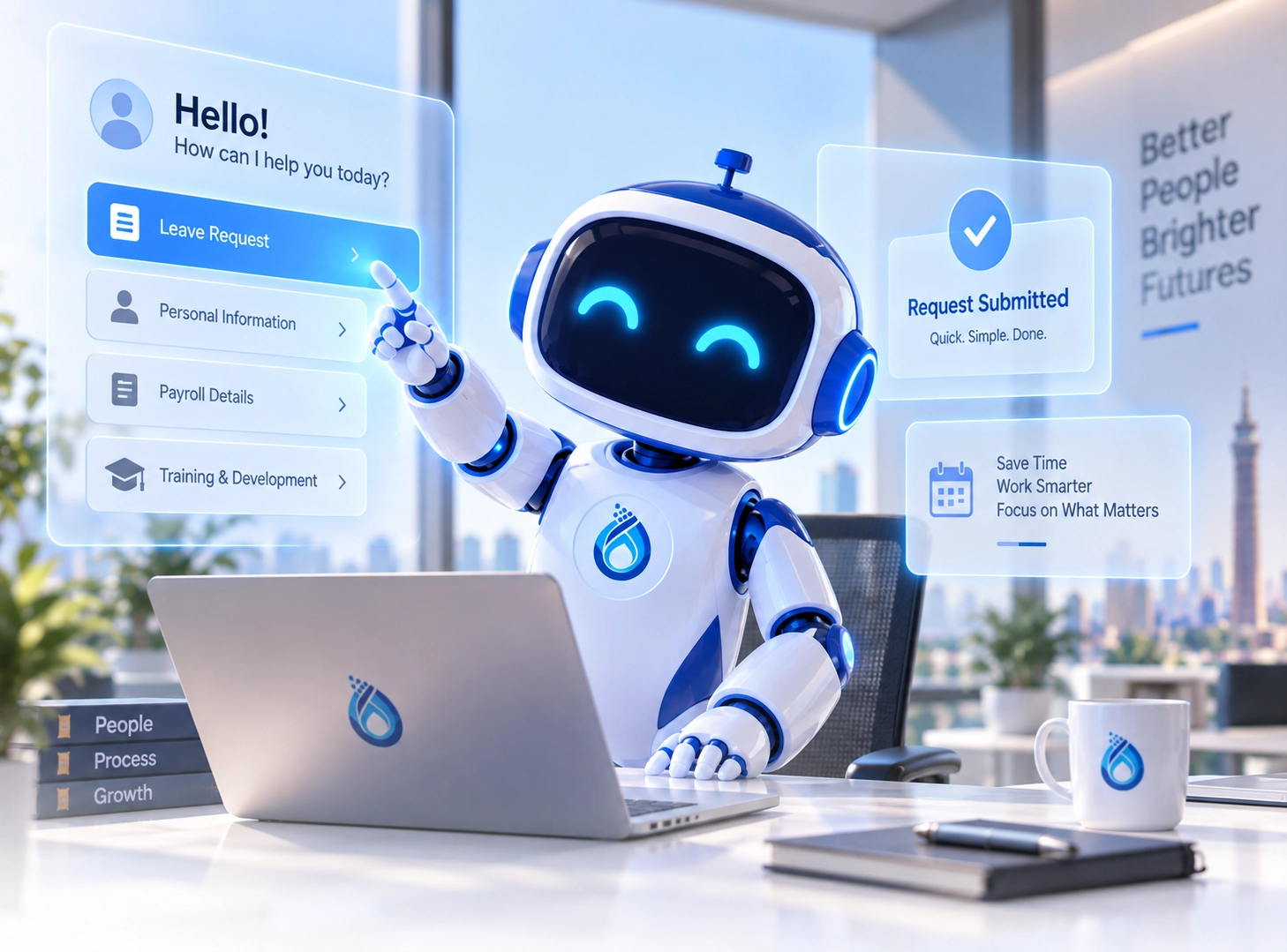
A strong employee self-service portal is not limited to an electronic leave form. In practice, it should provide one unified entry point where employees can handle the most common day-to-day HR transactions without having to return to HR every single time. An effective ESS portal should allow employees to submit leave and permission requests, view their available balances before submission, raise service or asset requests when needed, and track request status from submission all the way to final approval. It should also make approval status visible: is the request with the direct manager, with HR, approved, or returned for missing data? The value here is not the electronic format itself. It is clarity. When employees know what they can request, what steps the request will go through, and the expected time to completion, direct inquiries go down, repeated follow-ups decline, and the HR team becomes less occupied by repetitive work.
Why is workflow the true core of the module?
Many organizations have digital forms, but they do not have a real workflow. The difference is significant. A digital form captures the data, but the workflow determines how that data moves between stakeholders, when notifications are sent, when a request stops, and what happens in cases of rejection, delay, or the need for an additional approval. In real operating environments, not all requests go through the same path. Approvals may differ by department, branch, request type, job grade, or asset value. That is why HR approval workflow software must be flexible enough to translate these cases into clear approval routes instead of relying on personal follow-up or informal workarounds. When workflow is properly configured, approvals become faster because every party knows what is expected, tracking becomes easier because the system records exactly where the request stands, and transparency rises because the employee, the manager, and HR are all looking at the same process instead of different versions of the truth.
How does self-service improve both the employee experience and the HR experience?
From the employee’s perspective, self-service means greater independence and less wasted time spent asking questions or visiting HR for routine matters. Employees do not simply want to submit a request; they want to feel that the company has a clear and professional way to manage everyday needs. From the HR perspective, self-service reduces administrative workload. Instead of answering the same questions every day, entering requests manually on behalf of employees, or chasing delays through messages, the HR team can focus on organization, improvement, and exception handling rather than processing every basic transaction one by one. The value multiplies when the portal is linked to a mobile employee app. Employees do not need to wait for a desktop computer or be physically present at headquarters. Managers can approve requests from their phones and receive instant notifications, which shortens the approval cycle significantly.
When does ESS move from a nice improvement to an operational necessity?
An employee self-service portal becomes a real necessity when a company begins to notice symptoms such as a continuous increase in manual requests, employee complaints about slow approvals, difficulty tracking transaction status, conflicts between what employees believe and what HR records show, or overreliance on certain individuals who ‘know how things work’ instead of one system everyone can use. The need becomes even more urgent in companies with multiple branches, field teams, high volumes of leave and permissions, or organizations that require clear documentation for every internal transaction.
Conclusion
An employee self-service portal is not simply a convenient interface. It is an operational tool that reduces pressure on HR, organizes request flows, speeds up approvals, and gives employees a clearer and more professional internal experience. The more structured the workflow is, the more capable the company becomes of delivering faster internal service with less dependence on manual follow-up.