
- 1. Why has attendance management become more complex than time recording alone?
- 2. Biometrics, mobile, and device integration: why do companies need more than one registration method?
- 3. Managing shifts and flexible work without operational chaos
- 4. Absence, lateness, and overtime: when attendance becomes part of payroll
- 5. How should you compare systems before asking for pricing?
- 6. Conclusion
Why has attendance management become more complex than time recording alone?
In businesses with a fixed schedule, attendance may seem straightforward. But once there are multiple shifts, several locations, field employees, or a need to track lateness and overtime accurately, manual handling or limited tools are no longer enough. At that point, the organization is not simply looking for a time recorder. It needs attendance and time tracking software that can reflect the real operating environment. According to the Attendance & Departure module in Tidal HCM, the goal is not only to store clock-in and clock-out times. It is to process attendance variables accurately, manage shifts and flexible schedules, support multiple registration methods, manage leave and return from leave, and even control doors and access where needed. This broader scope is what turns the system from a time tool into a core operational layer.
Biometrics, mobile, and device integration: why do companies need more than one registration method?
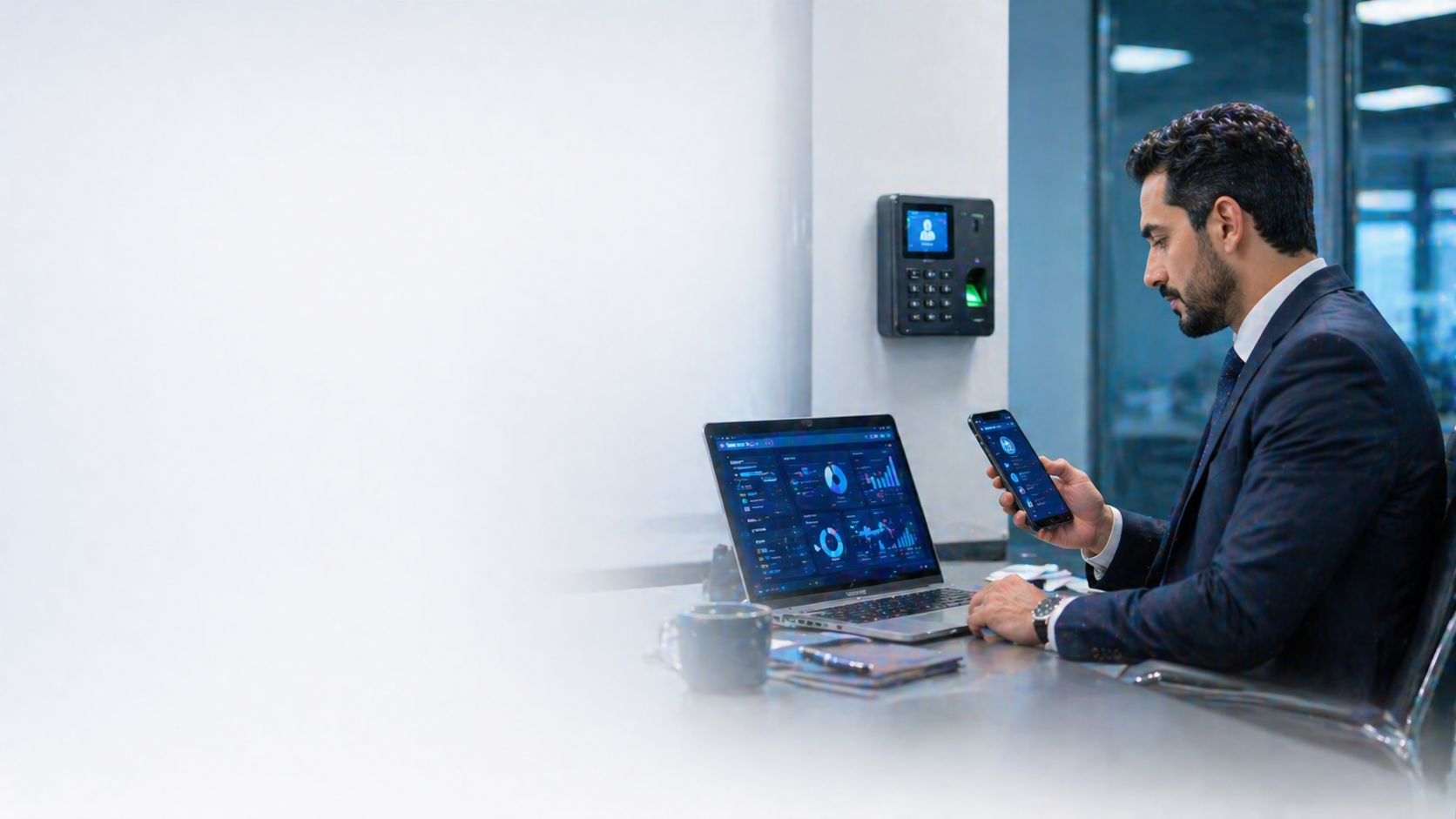
Not all work environments are the same. Some companies rely on traditional biometric devices, others need mobile attendance for field staff or remote workers, and some require a combination of methods depending on the employee role. That is why the best attendance system for companies is the one that supports multiple registration methods, not the one that forces the same process on everyone. Device integration matters because it increases data accuracy. But the real value appears when the system can also support controlled manual entry or mobile attendance, with capabilities such as remote biometric data transfer without requiring a full internal network in every scenario. This gives companies with distributed sites or mobile teams much greater flexibility.
Managing shifts and flexible work without operational chaos
Companies that operate with shifts know that the challenge is not the schedule itself, but its impact on other processes. A small change in a shift may affect working hours, entitlements, lateness calculations, absence treatment, and even discipline evaluation. That is why strong shift management must be part of a broader system that can understand how each variable affects the bigger picture. Managing shifts and flexible work means the system should support different rules, personal permissions, multiple work plans, and exceptional cases without exhausting manual intervention. This is important because many attendance mistakes do not come from the registration process itself, but from weak treatment of the rules behind it.
Absence, lateness, and overtime: when attendance becomes part of payroll
One of the biggest mistakes some companies make is separating attendance from payroll. Time is not only operational data. It is also a direct financial input. If absence, lateness, overtime, leave, and return from leave are not processed correctly, the issue will later appear in payroll runs, deductions, entitlements, and ultimately in employee satisfaction. That is where a unified system becomes especially valuable. When attendance is connected to payroll inside one HCM platform, data becomes more accurate, duplication is reduced, and monthly cycle closing becomes faster. Managing return from leave and linking it automatically to stopping or resuming salary payments also adds an important layer of financial control that disconnected systems struggle to deliver.
How should you compare systems before asking for pricing?
Before asking about attendance software pricing, you need to understand what you are really comparing. Price alone is not enough. Some systems look cheaper at first, but shift the burden to HR teams, require too many manual corrections, or fail to integrate properly with payroll. When evaluating options, ask five core questions: Does the system support shifts and flexible work? Does it accept more than one registration method, such as biometrics and mobile? Can it process lateness, absence, and overtime according to company policies? Is it connected to leave and payroll? Does it provide a clear record that management can rely on for reporting and review? If the answers are weak, the system is unlikely to serve the organization well in the long run, even if the initial price seems lower.
Conclusion
Attendance and time tracking software is no longer just a time tool. It is part of the operational and financial infrastructure of the company. The more effectively the system manages shifts, multiple registration methods, attendance variables, and payroll integration, the greater its impact on reducing errors, speeding up work, and improving operational fairness. That is why the right choice should be based on the company’s real working model, not just on the number of devices or the look of the interface.