

- 1. The Core Angle: Transcending 'Screen Syndrome' and the Feature Trap
- 2. The Ripple Effect of Data Errors: Catastrophic Lessons from Global Payroll Failures
- 3. Security, Performance, and Usability: Pillars of Reliability and Employee Experience
- 4. Operational Quality Assurance and the Architecture of Institutional Trust
The Core Angle: Transcending 'Screen Syndrome' and the Feature Trap
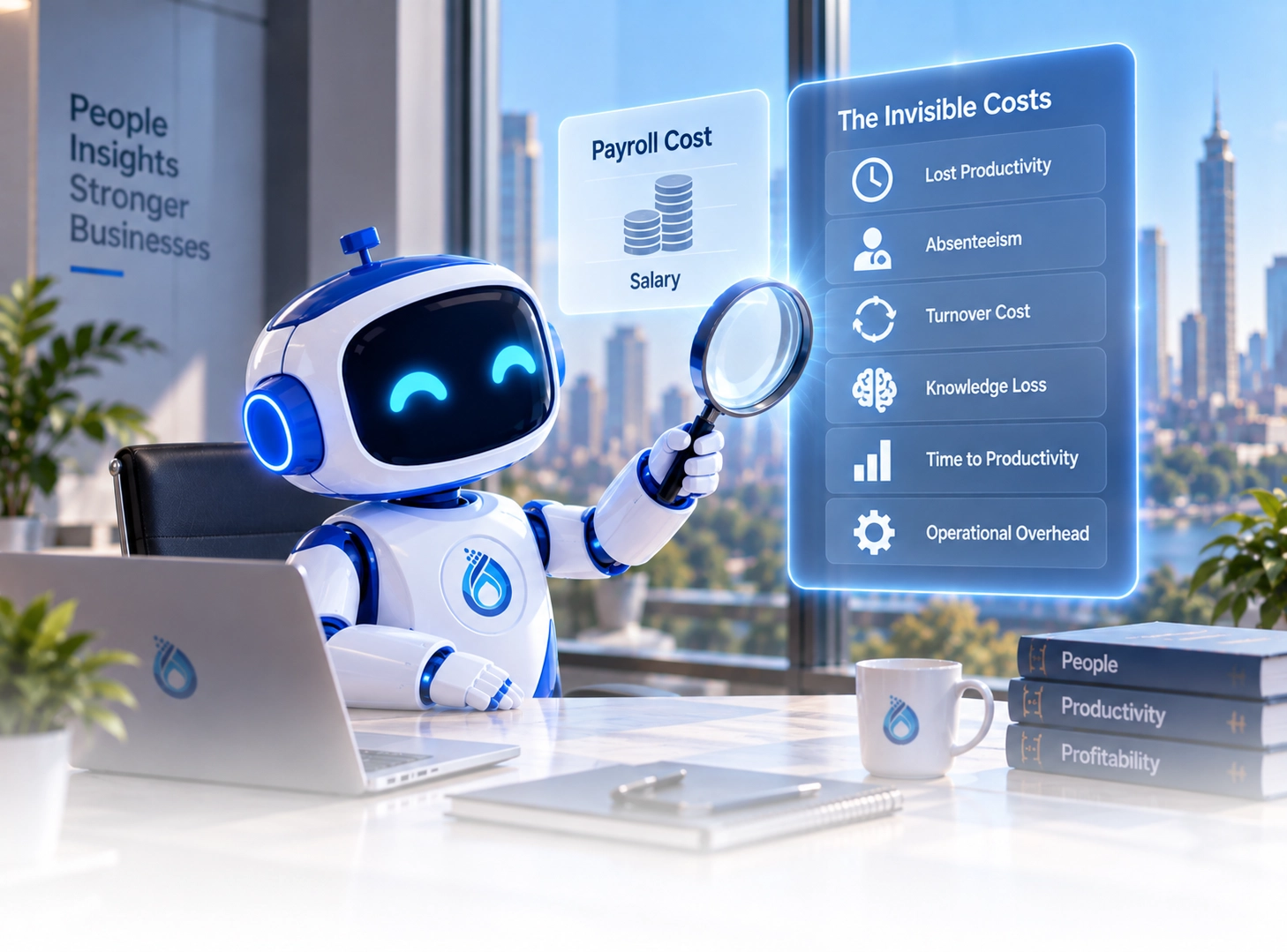
Many organizations embark on their Human Resource Management System (HRMS) digital transformation under the flawed assumption that system quality is measured by the sheer volume of user interfaces (Screens), feature density, or visually polished dashboards. However, operational reality in modern enterprise environments proves that an HRMS is not merely a presentation layer or data catalog; it is the core operational work engine governing an enterprise's most sensitive assets—employee master records, payroll calculations, end-of-service entitlements, financial rights, access governance, privacy compliance, and business continuity.
Enterprises frequently fall into the "Feature Trap"—selecting software suites that boast extensive catalogs of secondary capabilities at the expense of foundational architectural stability. The established DeLone & McLean Information Systems Success Model demonstrates that IS success depends on interdependent dimensions, anchored primarily by System Quality and Information Quality. When a platform is overloaded with complex features without robust underlying performance, processing speed, and data integrity, those extra features become operational liabilities that induce cognitive overload, increase administrative error rates, and erode user satisfaction.
True HRMS quality is not determined by what a vendor showcases in canned demonstrations, but by how reliably, accurately, and securely the system performs under peak monthly operational workloads. Moving beyond surface-level "screen syndrome" toward systematic institutional trust is the defining imperative of successful HR digitization.
The Ripple Effect of Data Errors: Catastrophic Lessons from Global Payroll Failures
Data Accuracy serves as the fundamental cornerstone of the HR technology ecosystem. Minor discrepancies in employee master data—such as job classifications, overtime formulas, or salary grades—do not remain isolated accounting bugs; they directly erode employee financial trust and compromise strategic workforce planning. This data integrity must operate hand-in-hand with Process Accuracy, ensuring the workflow automation engine accurately executes complex labor regulations, retrospective pay adjustments (Retrospectivity), composite leaves, and concurrent employment arrangements without forcing staff into manual workarounds.
Documented global enterprise failures provide stark empirical proof of the catastrophic costs of payroll and data breakdown. The Queensland Health payroll replacement project in Australia went live without complete data verification, spawning over 35,000 catastrophic payroll errors. The health authority was forced to deploy 1,010 dedicated payroll staff to execute over 200,000 manual workarounds fortnightly, ultimately driving remediation and operational costs to AU$1.25 billion in what a judicial inquiry termed the worst public administration failure in Australian history.
Similarly, the Government of Canada's Phoenix Pay System implementation generated a backlog of over 500,000 pay requests and exceeded $520 million in net pay errors across 290,000 civil servants. Executive leadership prioritized rigid deployment deadlines over functional readiness and security, requiring the hiring of 1,400 additional staff and hundreds of millions in emergency remediation.
Security, Performance, and Usability: Pillars of Reliability and Employee Experience
Electronic Human Resource Management Systems (EHRMS) process an organization's most sensitive assets: Personally Identifiable Information (PII), compensation structures, banking details, and performance evaluations. Comprehensive quality mandates rigorous protection through Role-Based Access Control (RBAC), end-to-end encryption at rest and in transit (AES), routine data audits, and strict compliance with global mandates like GDPR and Data Subject Access Rights (DSAR) to avert severe regulatory penalties.
Technical quality must also be guaranteed through contractual Service Level Agreements (SLAs) and monitored performance indicators. A feature-rich HRMS is valueless if it suffers latency or downtime during month-end payroll processing. Production benchmarks demand high availability uptime, data accuracy commitments exceeding 98%+, and robust processing throughput to prevent overnight batch processing overruns that historically triggered catastrophic project backlogs.
Furthermore, empirical research anchored in the DeLone & McLean model confirms that usability and responsive Service Quality directly enhance user satisfaction and continuous system usage. Intuitive interfaces minimize operator error rates, turning the software into an empowering operational asset rather than a source of workplace frustration.
Operational Quality Assurance and the Architecture of Institutional Trust
A dangerous misconception among enterprise IT teams is assuming that passing predefined Test Cases in sandbox environments equates to production readiness. There is an essential distinction between reactive Software Testing—which merely identifies code bugs post-development—and proactive Operational Quality Assurance (QA)—which enforces process standards, data integrity, and compliance across the entire system lifecycle.
A software module may achieve 100% pass rates in isolated unit tests yet fail catastrophically when subjected to thousands of concurrent users or legacy ERP integrations. Establishing rigorous Quality Gates across every development phase ensures the synchronized harmony of all three DeLone & McLean pillars: System Quality, Information Quality, and Service Quality.
Institutional trust cannot be purchased through marketing promises; it is earned when executives rely completely on HR intelligence, and employees know their compensation will be calculated flawlessly every single pay cycle. Tidal Information Systems, through its Inspira One platform, delivers the battle-tested architecture that transforms these quality standards into operational reality.
Ready to Evaluate the Operational Quality and Reliability of Your HRMS?
Connect with Tidal Information Systems today for an expert consultation to evaluate your HR technology ecosystem, optimize payroll accuracy, and implement Inspira One.
Schedule Your Strategic HRMS Consultation →