

- 1. Why are partial solutions no longer enough?
- 2. What makes a comprehensive HCM system different from scattered tools?
- 3. How does the system organize the employee file from day one?
- 4. What is the impact of unifying attendance, payroll, and approvals?
- 5. How does HCM support future growth and expansion?
- 6. What should companies evaluate before buying an HCM system?
- 7. Conclusion
Why are partial solutions no longer enough?
In many companies, digitization begins in an unstructured way: one tool for attendance, a separate employee file, another tool for payroll, and manual forms for leave requests or promotions. At first, this may seem manageable. But as the number of employees, policies, or branches increases, fragmentation starts creating serious operational friction. The first issue is duplicated data, because employee information is entered in more than one place. The second is slow updates, because any change in job title, status, or salary requires manual follow-up across several systems. The third is the lack of a unified view, because reports depend on collecting information from scattered sources instead of drawing it from one trusted platform
What makes a comprehensive HCM system different from scattered tools?
The most important advantage of HCM is not simply the number of modules, but the way those modules work together. Tidal HCM brings together personnel affairs, attendance, payroll, employee requests, recruitment, performance management, training, mobile access, and security. This means HR is managed as one connected process rather than a series of isolated tasks. For example, the Personnel Affairs module does more than store data. It supports a complete electronic employee file, smart document archiving, transfers and promotions, job status tracking, and employee complaints and grievances. When this is connected to attendance, payroll, and approvals, the company no longer has to rebuild the same information in several places or reconcile it manually at the end of each month.
How does the system organize the employee file from day one?
An employee file is not just a profile page. It is the operational center from which contracts, certificates, transfers, promotions, leave balances, penalties, assets, and clearance processes are managed. That is why an electronic employee file system significantly improves administrative control from the first day of implementation. When documents are stored in one secure file and changes are documented over time, access to information becomes faster and managerial decisions become more accurate. The company also gains a structured data foundation that can later be used in recruitment, performance, training, payroll, and reporting without rebuilding the employee record each time.
What is the impact of unifying attendance, payroll, and approvals?
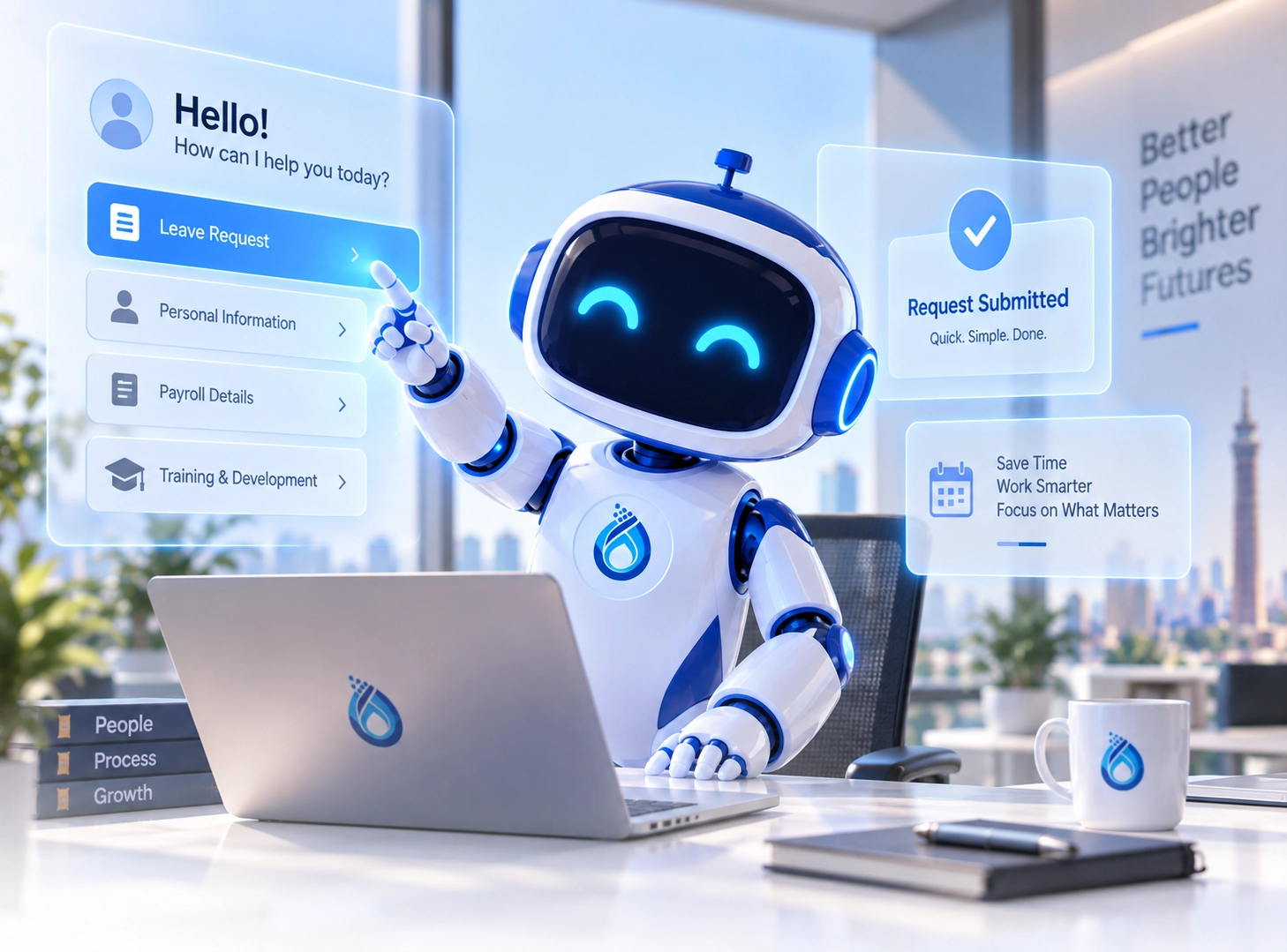
The real value of HCM appears when processes become connected. When attendance variables are processed accurately, leave is linked to employee balances, and return-from-leave actions automatically resume payroll, salaries become more accurate and the need for manual intervention decreases. And when requests move through smart approval workflows, administrative chaos drops and every request has a clear route and a defined owner. This does not just save time. It also builds trust. Employees know their requests are recorded and traceable, while management gains a more consistent, auditable process across the organization.
How does HCM support future growth and expansion?
Companies that focus only on solving today’s problems may choose a limited system and later find themselves forced to replace it. Companies that view HR as part of long-term growth need a platform that is scalable from the beginning. As the business expands, adds new branches, increases headcount, or adopts more complex work patterns, a single platform becomes even more valuable. Instead of rebuilding processes from scratch, the company can expand usage within the same system, add policies or modules gradually, and maintain one reliable source of truth across the organization.
What should companies evaluate before buying an HCM system?
The right decision does not depend only on the number of features shown in a proposal. Before buying an HCM system for companies, it is essential to assess how comprehensive the system is, how easily the modules connect with each other, how flexible the configuration is, how ready the reporting is, and how clear the security and permission model is. It is also important to make sure the journey does not end at purchase. A mobile app, smart attendance options, integrated requests, strong permissions, and audit logs are all indicators that the platform is designed not only for daily processing, but also for control, governance, and sustainable operational maturity.
Conclusion
At its core, buying an HR management system for companies is a decision to reorganize the way work happens, not just to automate a few transactions. Any company that wants more disciplined growth, faster decisions, fewer errors, and a clearer view of its workforce will benefit more from a comprehensive HCM platform than from isolated HR tools. When organizations look at HCM from this perspective, they stop asking only, “What does the system do?” and start asking, “How will this system help us work better today and scale with confidence tomorrow?”