

- 1. What Is Employee Request Management? Moving Beyond Manual Bureaucracy
- 2. From Digital Intake to Workflow Automation: Business Rules & Role-Based Governance
- 3. Employee Self-Service (ESS) & Employee Experience: Redesigning Internal Dynamics
- 4. Strategic Transformation Challenges, Data Privacy Governance, and Enterprise Impact
What Is Employee Request Management? Moving Beyond Manual Bureaucracy
In many organizations, the primary operational bottleneck does not stem from the employee request itself, but from how that request moves through the enterprise. A routine leave application, attendance correction, employment verification letter, personal record update, or manager sign-off may appear simple on the surface. Yet, when these requests travel through loose paper forms, disjointed email threads, static spreadsheets, and endless manual follow-ups between employees, managers, and HR personnel, a straightforward transaction metastasizes into an administrative burden that drains institutional productivity.
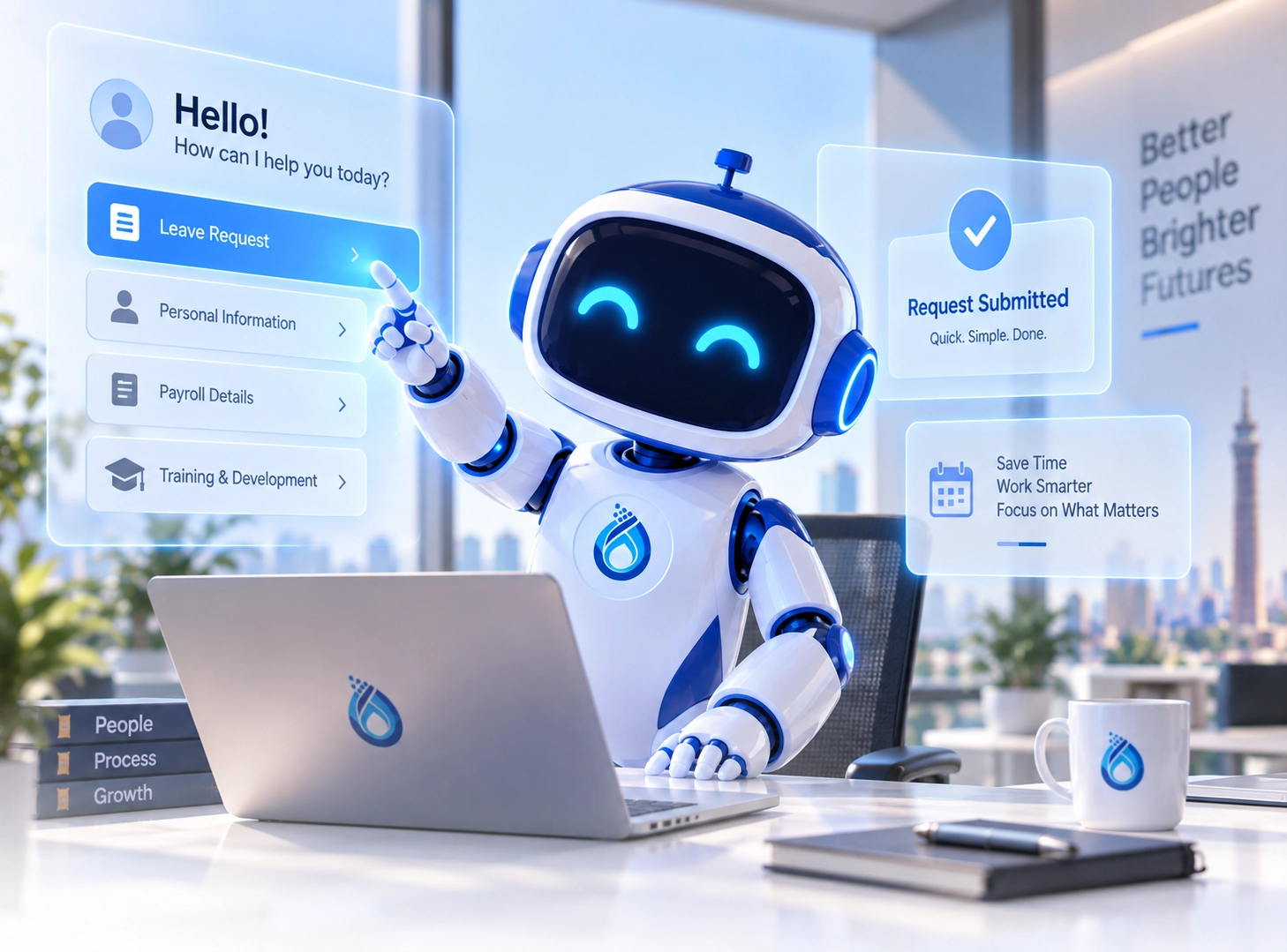
This friction underscores the strategic importance of Employee Request Management as a foundational component of modern HR Service Delivery, far transcending the superficial digitization of static forms into PDF attachments. Genuine organizational transformation begins when employees shift from total administrative dependency on HR staff to self-sufficient submission and real-time tracking via Employee Self-Service (ESS), while the enterprise transitions from manual chasing to automated Workflow Automation governed by dynamic business rules and role-based approvals.
Structured employee request management orchestrates the complete lifecycle of internal services: from real-time data validation at submission, to automated hierarchical routing, to terminal processing and audit logging. This modern operational paradigm creates a compounding value chain: (Reduced Transaction Time → Lower Administrative Overhead → Structured Approval Routing → Zero Duplicate Entry Errors → Complete Audit Transparency → Superior Employee Experience → Elevated Operational Efficiency).
From Digital Intake to Workflow Automation: Business Rules & Role-Based Governance
True employee request automation extends far beyond deploying a digital submission form. The core enterprise value materializes when requests are orchestrated by a dynamic Workflow Engine powered by configurable Business Rules, Role-based Approval matrices, automated Notifications, tamper-proof Audit Trails, and integrated Service Level Agreements (SLAs) that prevent operational gridlock.
An intelligent workflow engine seamlessly accommodates organizational variance: standard annual leave follows an automated manager sign-off, medical leaves trigger policy-based document requirements, and salary advance requests dynamically reroute according to financial limits and executive delegation rules. Instead of burdening HR specialists with memorizing every policy nuance and chasing approvals manually, the system dynamically routes each transaction in strict accordance with corporate governance:
Employee Self-Service (ESS) & Employee Experience: Redesigning Internal Dynamics
The Digital Employee Experience (DEX) is rarely shaped solely by overarching strategic announcements; it is defined through daily operational touchpoints: Can employees submit routine requests effortlessly? Do they have real-time visibility into their request status? Must they send multiple emails to follow up? And does their request depend on the physical presence of a single HR administrator?
Employee Self-Service (ESS) grants employees institutional autonomy and transparent access to company services, relieving HR practitioners from repetitive administrative firefighting so they can focus on organizational advisory and talent development. Crucially, workflow automation does not eliminate the human element; it reallocates human expertise strategically: standardized requests resolve instantly via pre-set business logic, while nuanced exceptions, compassionate inquiries, and sensitive personnel decisions escalate directly to experienced HR leaders with full context.
Strategic Transformation Challenges, Data Privacy Governance, and Enterprise Impact
Despite the substantial operational dividends of automated service delivery, organizational transformation requires addressing four critical hurdles: first, Change Management to overcome ingrained informal communication habits; second, eliminating procedural bloat prior to workflow design, avoiding the trap of simply "digitizing bad bureaucracy"; third, rigorous Data Privacy and Role-based Access Control (RBAC) to safeguard confidential employee records; and fourth, closing the Digital Divide by providing intuitive mobile accessibility for frontline, field, and distributed workforces.
Ultimately, transitioning to digital employee request management is not about turning paper into screens; it is a holistic redesign of the internal service journey. When enterprise leadership clearly answers: "What should an employee's service journey look like?", technology ceases to be an administrative cost center and becomes a strategic catalyst for operational agility, workplace satisfaction, and organizational growth.
Ready to Eliminate Administrative Friction and Automate Employee Requests?
Tidal's cloud-native Inspira One delivers an intuitive Employee Self-Service (ESS) platform and powerful workflow engine that automates approvals, enforces business rules, and connects seamlessly to payroll with enterprise-grade security.
Schedule a Consultation & Product Demo