

- 1. Engineering Shift Schedules and Ensuring Continuous Manpower Coverage
- 2. Shift Rotation and Resting Gaps: Balancing Regulatory Compliance and Employee Health
- 3. The Shift Handover Gap & Mitigating Sudden Absenteeism Without Overtime Inflation
- 4. Multilingual Shift Workforce Governance & Digital WFM Transformation
Engineering Shift Schedules and Ensuring Continuous Manpower Coverage
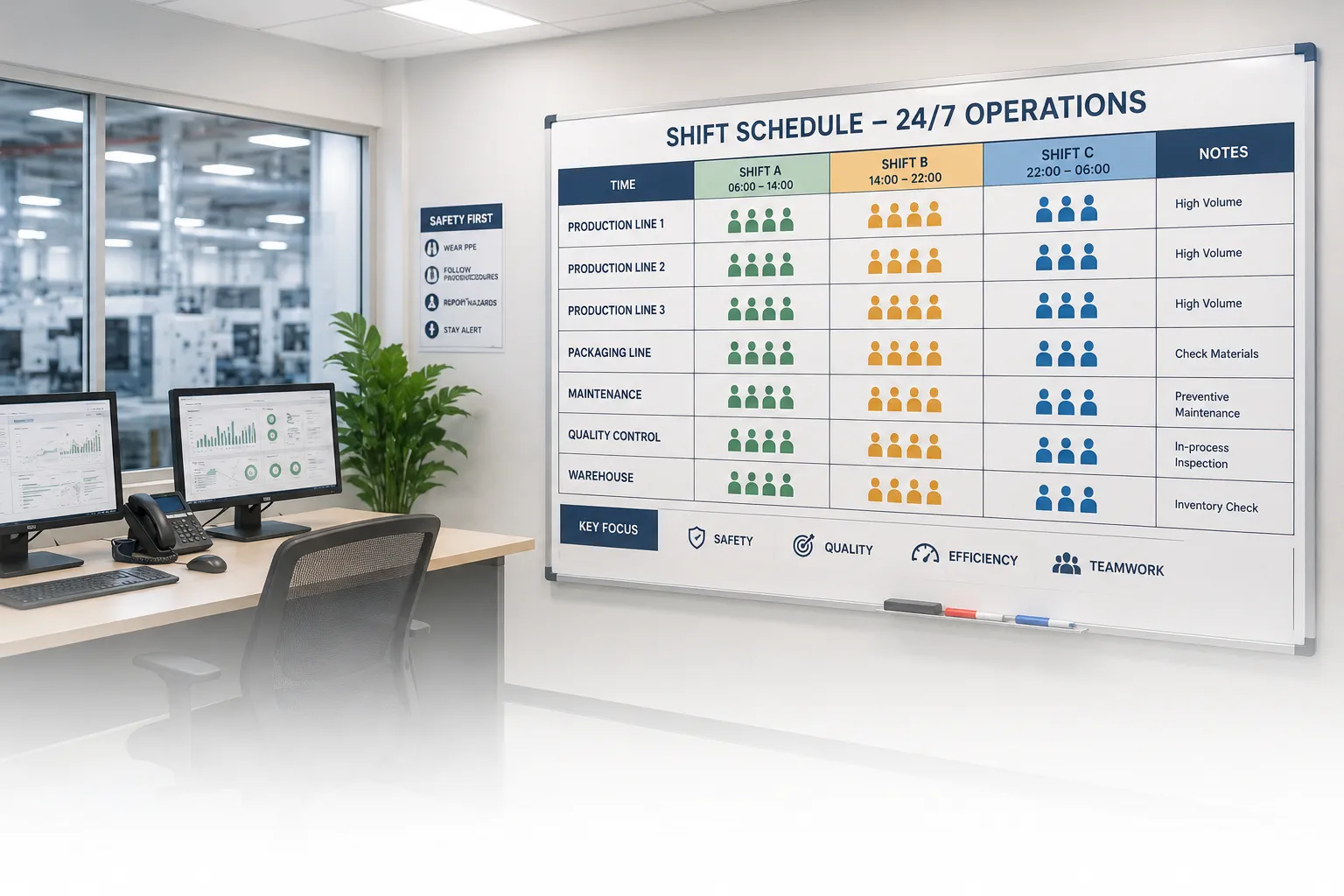
Managing large manufacturing facilities requires specialized skills in aligning workforce planning with daily operational capacity. Efficient scheduling is not merely about filling empty slots on a spreadsheet; it involves engineering rosters to avoid labor surpluses during slow periods and critical shortages during peak production.
Advanced plants in the Kingdom's major industrial hubs utilize structured rotating shift schedules to manage workforce movements. These configurations include globally recognized systems such as the DuPont Schedule and the Pitman Schedule. These schedules allow continuous 24/7 operations through balanced, rotating team rosters that systematically cycle between working hours and designated rest days.
The core challenge lies in balancing technical skill sets across every single shift. Each roster must feature an equivalent mix of skilled machine operators and preventative maintenance technicians to secure operational stability and handle sudden breakdowns immediately.
Shift Rotation and Resting Gaps: Balancing Regulatory Compliance and Employee Health
The structure of rest intervals between rotating shifts is one of the most critical factors influencing manufacturing precision and occupational safety. On the production floor, operators and technical workers face constant physical and mental strain, leaving them vulnerable to Shift Fatigue if their rosters overlap without adequate recovery windows.
From a compliance perspective, Saudi Arabia's occupational safety standards and guidelines enforce strict conditions to protect shift workforces. Factories operating rotating shifts are mandated to secure an uninterrupted resting gap of at least 12 consecutive hours between shifts. Additionally, it is highly recommended to limit continuous night shifts (defined from 11:00 PM to 6:00 AM) to no more than three consecutive months unless explicit written consent is secured from the employee.
Aligning these periods protects the factory from severe penalties during MHRSD field inspections, while significantly reducing workplace accidents and human errors on the assembly lines.
The Shift Handover Gap & Mitigating Sudden Absenteeism Without Overtime Inflation
The shift handover is often the weakest link in a factory's daily operating cycle. When the outgoing shift prepares to hand over the plant floor, critical information gets lost in transition without standardized protocols. Meanwhile, sudden technician absenteeism forces plants into double shifts (up to 16 hours), driving worker fatigue and inflating emergency overtime (OT) budgets by 1.5x rates.
⚡ Modern Digital Shift Handover & Backup Protocol
Digital Machine Status
Instant log of vibration, pressure settings, and raw material feed levels.
Auto-Biometric Substitute
Biometric absence triggers standby On-Call Pool allocation within minutes.
Zero OT Inflation
Prevents 16-hr double shifts, maintaining health safety and labor budget integrity.
Multilingual Shift Workforce Governance & Digital WFM Transformation
Production floors in major Saudi factories feature a diverse mix of local national talent and foreign workers from different cultural and linguistic backgrounds. When shift rosters or operating instructions are published in a single language, the risk of miscommunication increases. Multilingual communication platforms allow operators to view shift rosters, leave requests, and safety guidelines in their native languages.
Ultimately, managing continuous shifts via manual logs is no longer viable. Advanced Workforce Management (WFM) platforms integrated with specialized HCM engines enable automated complex shift generation, dynamic rest gap verification, and real-time synchronization between biometric physical attendance and Mudad WPS payroll processing. Discover how Inspira One HCM by Tidal automates and optimizes your plant's shift structures seamlessly.