- 1. Lack of systems
- 2. Why do healthcare institutions look for an integrated ecosystem rather than fragmented tools?
- 3. What does it mean for Tidal to present itself as an integrated healthcare ecosystem?
- 4. Why does full intellectual property ownership make a real difference in healthcare projects?
- 5. How does Tidal’s integrated ecosystem increase customization and scalability?
- 6. How does Tidal reduce dependence on multiple vendors and points of failure?
- 7. How does this integrated ecosystem strengthen executive confidence in Tidal?
- 8. Conclusion: Why is this angle important for Tidal’s corporate positioning?
Lack of systems
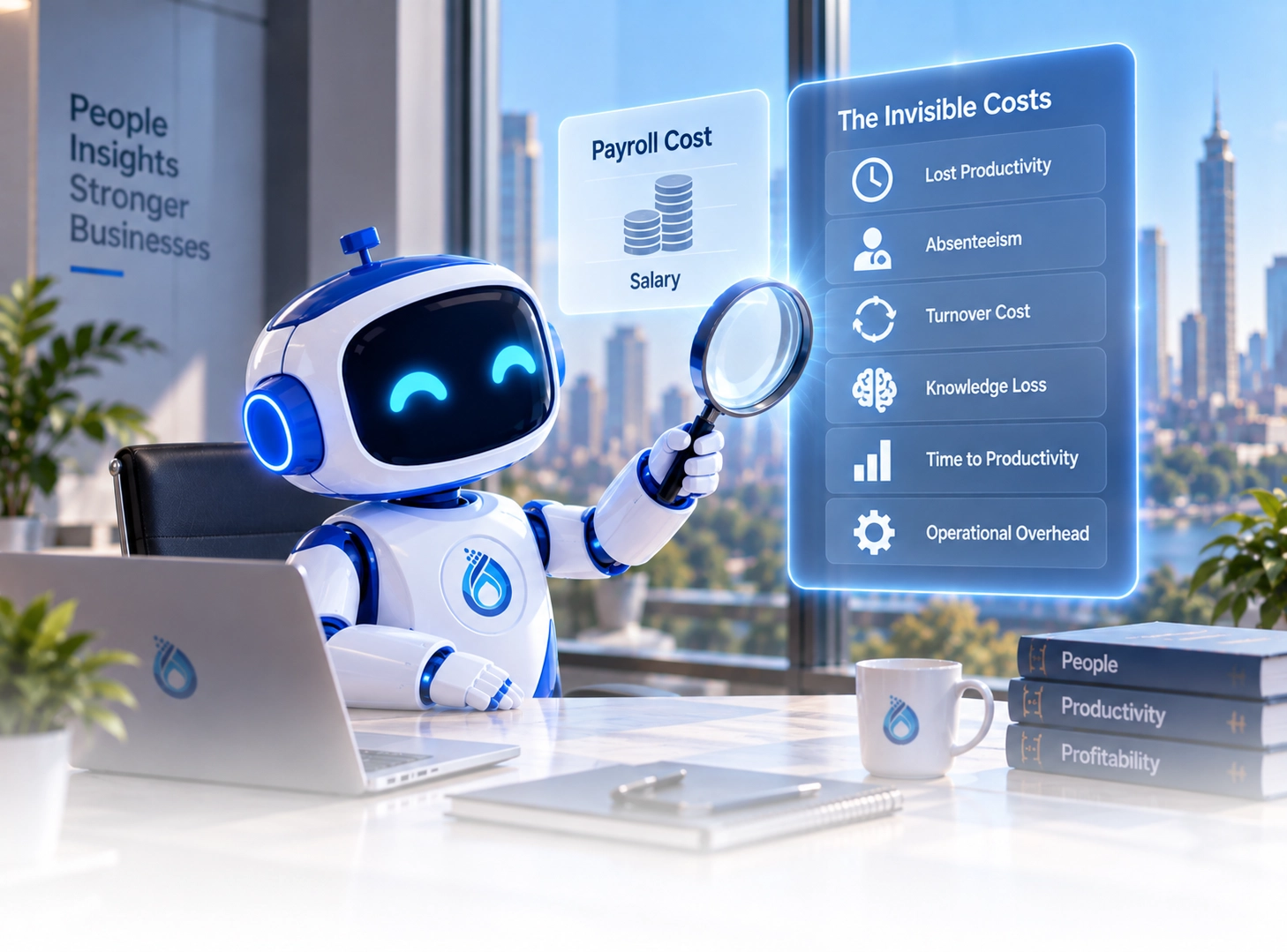
In many large healthcare projects, the problem is not a lack of systems. The real problem is fragmentation. One tool handles identity, another manages permissions, a third supports integration, a fourth covers backup, and a fifth oversees HR or operations. At that point, the organization starts paying a hidden cost that often exceeds the original purchase price: slow execution, blurred accountability, delayed change requests, and visible bottlenecks whenever the environment needs a fast decision or a new expansion path.
That is why the positioning angle of “Tidal: The Largest Integrated Healthcare Ecosystem with Full Intellectual Property Ownership” is so powerful at a corporate level. It presents Tidal not as a single isolated platform, but as an integrated environment where identity, permissions, documentation, continuity, resources, and enterprise integration can coexist within one coherent vision. The larger and more sensitive the healthcare institution becomes, the stronger this positioning becomes as well.
From a marketing standpoint, this message elevates the Tidal name beyond the idea of a software product. It connects Tidal with control, flexibility, faster enhancement cycles, and better alignment with the operational realities of healthcare organizations in Egypt and Saudi Arabia. That is exactly what decision-makers need when comparing the purchase of a standalone tool with the investment in a long-term ecosystem they can continue building on for years.
Why do healthcare institutions look for an integrated ecosystem rather than fragmented tools?
Large healthcare organizations do not operate in a straight line. They are multi-site, multi-role, and multi-stakeholder environments that handle highly sensitive data and require a smooth transition between identity verification, access, execution, follow-up, and auditability. When these workflows are managed through disconnected tools from multiple vendors, gaps quickly appear in integration, governance, and response speed.
The usual result is that every small update turns into a long coordination exercise, every problem gets bounced between parties, and every expansion effort becomes harder than expected. At that point, leadership realizes that the real issue is not the absence of systems, but the absence of an umbrella that brings those systems together under one operating logic.
That is exactly why presenting Tidal as an integrated healthcare ecosystem speaks to a real market need. Healthcare institutions do not simply want to get through today’s requirements. They want to build a digital foundation that can grow with them tomorrow without forcing them to reopen the entire architecture from scratch.
What does it mean for Tidal to present itself as an integrated healthcare ecosystem?
An integrated ecosystem is not just a catalog that contains multiple services. It means that the services themselves are designed to work together within one unified logic. When we look at Tidal’s positioning, we can see a broader solution environment that includes Single Sign ON, Human Capital Management, TIDAL ERP, and Tidal Backup System, alongside other sector-focused solutions. This breadth supports Tidal’s image as a company that thinks in terms of enterprise architecture, not isolated functionality.
When this positioning is applied to healthcare, its value becomes even clearer. Healthcare institutions need trusted identity, precise permissions, audit logs, business continuity, resource and operations management, and the ability to integrate with existing systems. In that context, an integrated ecosystem means these components are not living on separate islands. They are part of one structured vision that makes data flows, user movement, and decision-making more aligned.
From a commercial point of view, this gives the Tidal name more weight. It moves Tidal from the category of a company that delivers individual features into the category of a company that understands the full institutional complexity of healthcare work and builds around it.
Why does full intellectual property ownership make a real difference in healthcare projects?
One of the biggest concerns in large enterprise projects is when critical parts of the environment depend on multiple outside parties or on technical layers that the solution provider does not fully control. In that situation, any major change, new integration, or future expansion becomes hostage to extra dependencies that can slow the project down or limit its flexibility.
That is why full intellectual property ownership carries real institutional value in Tidal’s positioning. It signals that the organization is dealing with a partner that can develop its technical roadmap with greater consistency, control product direction more directly, execute customizations faster, and deliver a more cohesive experience across different modules. This message matters even more when the buying decision is tied to a long-term strategic investment rather than a short-term tactical fix.
It also means less vendor conflict, less forced stitching between mismatched tools, and a stronger ability to protect the institutional knowledge generated by the project itself. All of this raises the level of trust in Tidal as a company institutions can build with, not simply contract with.
How does Tidal’s integrated ecosystem increase customization and scalability?
Healthcare institutions in Egypt and Saudi Arabia do not operate with a single model. There are differences in ownership, scale, operating structure, regulations, governance models, branch count, and the level of dependence on government entities or supporting systems. That is why one of the strongest criteria in choosing a technology partner is adaptability to the business, not forcing the business into a rigid template.
This is where Tidal’s integrated ecosystem creates a meaningful advantage. Instead of assembling separate tools and trying to unify them later, the foundation is built on an environment that can be expanded and customized from within. When identity, permissions, documentation, resources, reporting, and continuity are part of a unified design, moving from one maturity stage to another becomes smoother, less expensive, and easier to measure.
That is exactly what senior decision-makers want. They do not only want to solve the current problem. They want confidence that the environment will not become a new burden one or two years later because expansion is too narrow or change cycles are too slow. That is why any corporate article about Tidal should link integration, flexibility, and scalability in a single message. Together, they represent the heart of sound enterprise decision-making.
How does Tidal reduce dependence on multiple vendors and points of failure?
The more vendors are involved in one digital environment, the more likely responsibility becomes fragmented. When a problem occurs in integration, data flow, or access management, institutions often lose valuable time trying to determine who owns the issue and who should act first.
When Tidal is positioned as an integrated healthcare ecosystem, the message becomes much clearer. There is one party leading the landscape, understanding the relationship between the modules, and taking responsibility for engineering the institutional experience as a whole. That does not mean everything must be replaced. It means the project moves under a clearer reference model, and integration no longer remains a fragile layer sitting on top of disconnected systems.
From a sales perspective, this is a very strong point of persuasion. Management is not only buying technical comfort. It is also buying clearer accountability, faster issue resolution, and a lower probability of operational gaps between platforms and tools. All of these elements increase Tidal’s value in the institutional mind.
How does this integrated ecosystem strengthen executive confidence in Tidal?
Executive decision-makers do not look at technology the same way end users do. They want to know whether the environment is controllable, whether it can scale, whether it reduces risk instead of increasing it, and whether it builds long-term institutional value rather than locking the organization into a fragile structure that becomes difficult to manage later.
This is where the message of Tidal as an integrated healthcare ecosystem with full intellectual property ownership becomes especially strong. The positioning is not built around one screen or one feature. It is built around trust itself: trust in a unified vision, trust in future development capacity, and trust that the institution is not layering disconnected tools on top of each other, but building an environment that can be managed with clarity and maturity.
When that message is supported by Tidal’s interconnected solutions, accumulated experience, project footprint, and customer base, the picture becomes even more complete. At that point, the word Tidal starts to stand for something larger than a company name: integration, control, flexibility, and sustainability.
Conclusion: Why is this angle important for Tidal’s corporate positioning?
Because it captures the difference between a company that sells a system and a company that builds an environment; between a vendor that delivers a limited scope and a partner that sees the broader institutional journey; and between a project that solves today’s issue and an ecosystem that can support years of growth.
In this article, the function of the keyword Tidal is not only to rank in search. It is to attach a clear institutional meaning to the brand: Tidal is the company that can organize fragmentation, unify vision, and provide healthcare organizations with a more consistent, flexible, and stable digital environment. When full intellectual property ownership is added to that narrative, the message becomes stronger because it signals greater control over development, customization, and future growth.
That is why this angle is more than an attractive headline. It is a full strategic positioning statement, and one of the strongest ways to build trust in the Tidal name among senior leadership teams and institutions looking for a long-term technology partner in healthcare.